
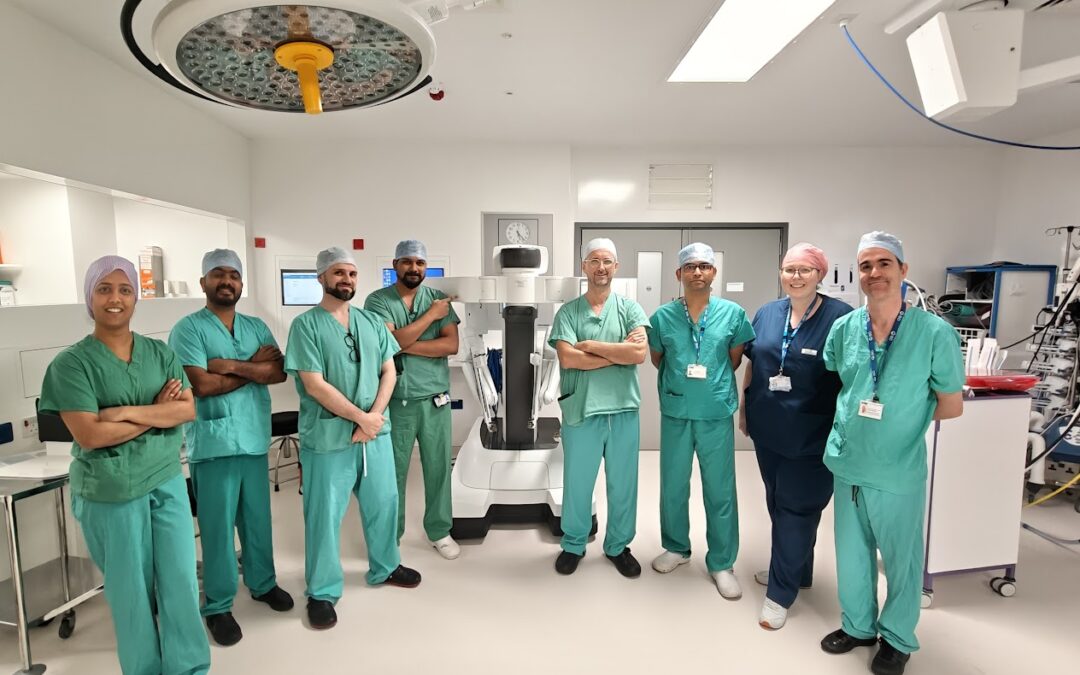
A major step forward for cancer care in Sheffield has been marked with the official unveiling of a brand new surgical robot at the Northern General Hospital.
The cutting-edge robot called ‘da Vinci Xi’ has arrived after a £1.45m donation from Sheffield Hospitals Charity,
Beth Crackles, Chief Executive at Sheffield Hospitals Charity, said: “Sheffield Hospitals Charity is proud to have contributed £1.45 million to bring this robot surgical system to the Northern General Hospital. It is the largest single donation we have ever made.”
“Made possible by the generosity of thousands of supporters, this technology is a gamechanger for those undergoing cancer surgery in Sheffield.”
“It is a powerful example of what can be achieved when a community comes together to support its NHS.”
The advanced technology is controlled by surgeons with hand and foot controls and will allow them to work in hard to reach areas.

Surgeons can operate more precisely on a wide range of cancers using robotic-assisted arms and a high-definition 3D view.
The robot will be used for a range of minimally invasive surgical procedures including lung, oesophageal, stomach, bowel, liver, pancreas and kidney surgeries.
Kirsten Major, Chief Executive for Sheffield Teaching Hospitals NHS Foundation Trust, said: “We were an early pioneer of robotic-assisted surgery in the UK, with the first procedures for bladder cancer patients performed at the Royal Hallamshire Hospital in 2013.”
“It’s fantastic to now have the new da Vinci Xi robot at the Northern General Hospital.”
“The introduction of this newest robot and surgical system represents another significant step forward in advancing patient care for those in Sheffield and beyond.”
Some of the benefits include shorter hospital stays, fewer and less invasive incisions and cuts, faster recovery times and reduced waiting times.
Increasing the number of robotic-assisted surgeries forms a key part of the new National Cancer Plan.
The approach is also part of a key drive to reduce waiting times, with the NHS aiming for 500,000 robotic-supported operations a year by 2035 as part of a drive .