
The UK’s first swear word census has been launched by linguists at the University of Sheffield, aiming to document the way people express themselves across the UK.
The project has invited the public to submit taboo words and phrases they use in everyday life in the largest census of its kind looking at ‘authentic’ language.
Submissions to the project are currently open with hundreds of responses and thousands of terms already submitted.
The project is led by Dr Chris Montgomery, 44, a senior lecturer in Dialectology who said: “We don’t know fully how people speak English.
“We want to capture the way people really speak in local communities, not just the standardised version.”
The researchers are focusing on parts of the language that are often overlooked but are “unfiltered and highly expressive.”
Dr Montgomery said that ignoring swear words in research risks never fully understanding how language works in real life.
He said: “The more data we have the better it is.
“Traditional accents or dialects might sort of fade away in time or the differences between them might become lessened” due to the popularity of social media.
The project has already uncovered lots of local insults, from the Scots-derived ‘Glaikit’ to Hampshire’s ‘Dinlo’. Both of which Dr Montgomery said he had “never heard before” but found “surprising and heartening.”
The project is being conducted in creative partnership with Modern Toss*, a satirical art and cartoon brand created by Jon Link and Mick Bunnage in 2004.
The data harvested will be used by Modern Toss to create exhibitions and a planned “swear map” of Britain.
Mr Link said: “I approached Sheffield University to see if they wanted to collaborate to create a proper data-led map of the whole UK.
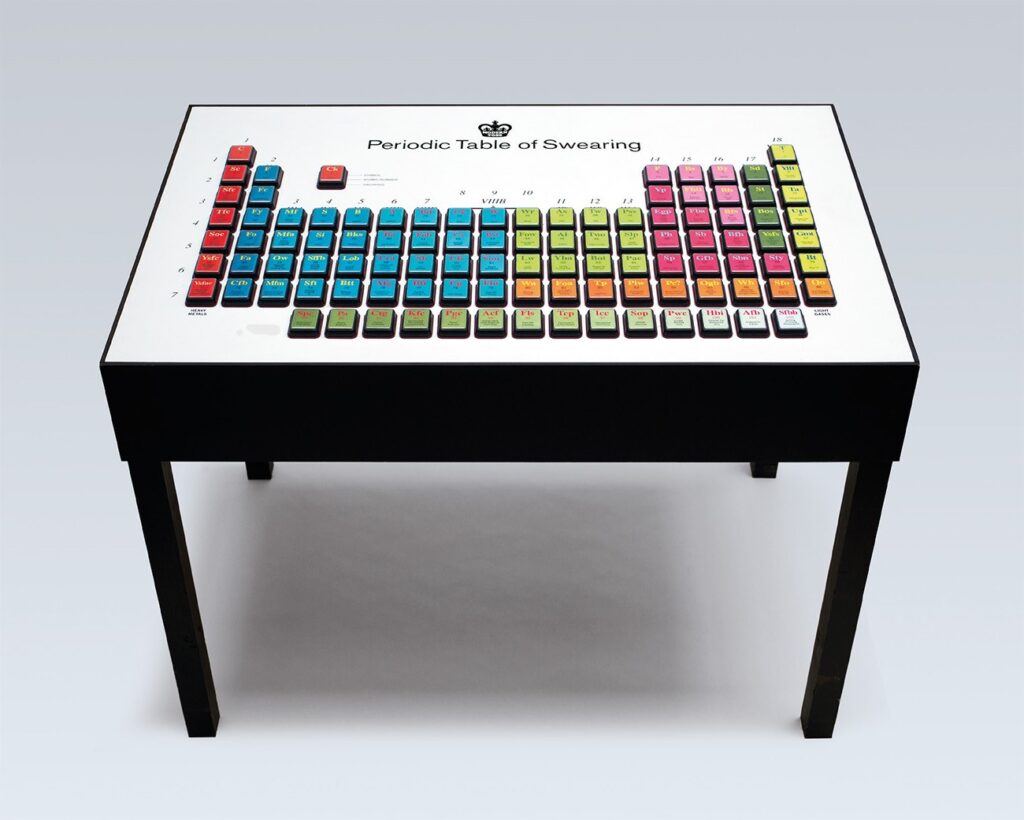
“We’re working towards exhibiting this data in push-button interactive artworks that use audio recordings of regional swear words, something like our interactive Periodic Table of Swearing.”
Dr Montgomery has previously led research into how Artificial Intelligence can better understand regional accents and dialects.
The project is intended as a resource for linguists to study language and expression in modern Britain for years to come.
*WARNING: Contains Explicit Language