
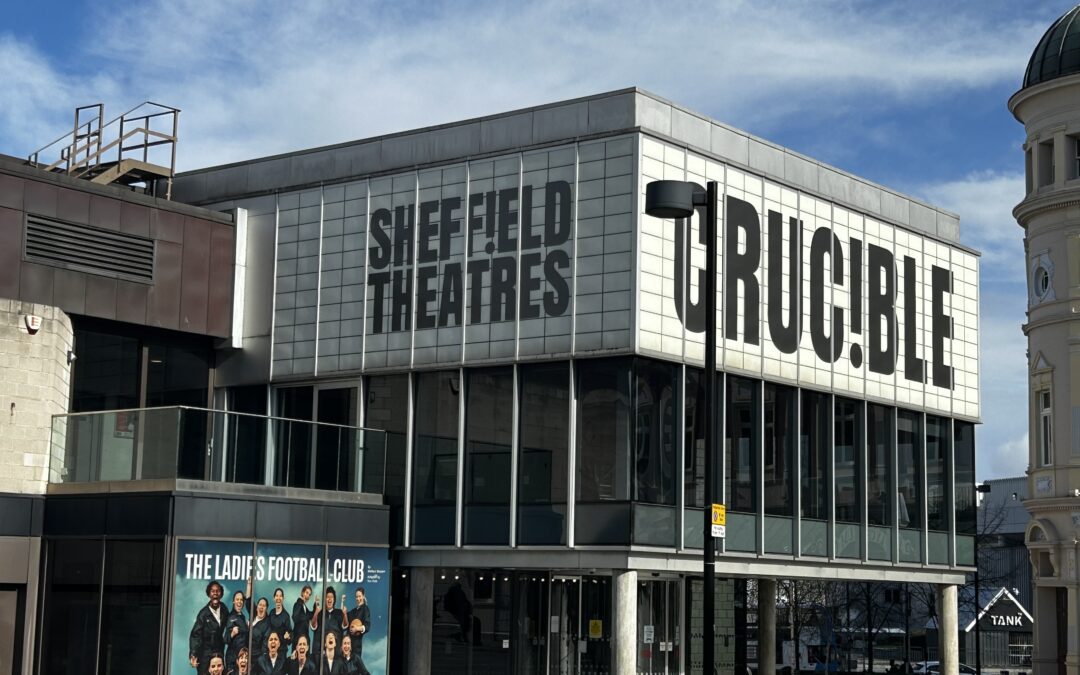
Plans for a £45m expansion project at the Crucible Theatre have been greenlit, as an important part of the UK’s largest theatre complex is set to undergo significant works in the near future.
This coincides with confirmation that the World Snooker Championships will be staying in Sheffield until at least 2045. Prime Minister Keir Starmer helped to facilitate the project and renewal.
Starmer said: “I had the pleasure of recently visiting Sheffield, the home of the oldest football club in the world, to encourage partners to support a major redevelopment of the iconic Crucible Theatre to keep sport and culture thriving in this city.
“I’m delighted this £45 million of funding will support the venue to continue to develop world-class theatre and stay host to the famous World Snooker Championships for many years to come.”
The investment will see the venue’s capacity increase by 50%. This will allow for productions to be fully presented “in the round”, which places performers at the centre of the audience. It will allow the theatre to scale up and down in size, and switch between this modern round format and a traditional stage.
Up to £35m is to be allocated from local and national government funds. The remaining £10m will come from private sector and philanthropic partners, with works set to begin in 2028.
Sheffield Theatres’ run four stages in Sheffield. The Crucible and the Tanya Moiseiwitsch Playhouse are set to close temporarily during construction. The Lyceum, the largest of the four, will host productions during that time, alongside the Montgomery. The Snooker World Championship will also be held at a temporary venue.
Chief Executive of Sheffield Theatres’ Tom Bird and Artistic Director Elizabeth Newman are delighted with the news. They said: “We already have the most brilliant permanent thrust stage in the UK. Through this transformation, the Crucible Theatre will become something even more extraordinary.
“For part of the year, it will be the finest thrust theatre in the world; for another, the best theatre in the round. This flexibility opens up radical new possibilities for collaboration, for how we connect with audiences, and for the dynamic, innovative ways stories can be told in the space.”