
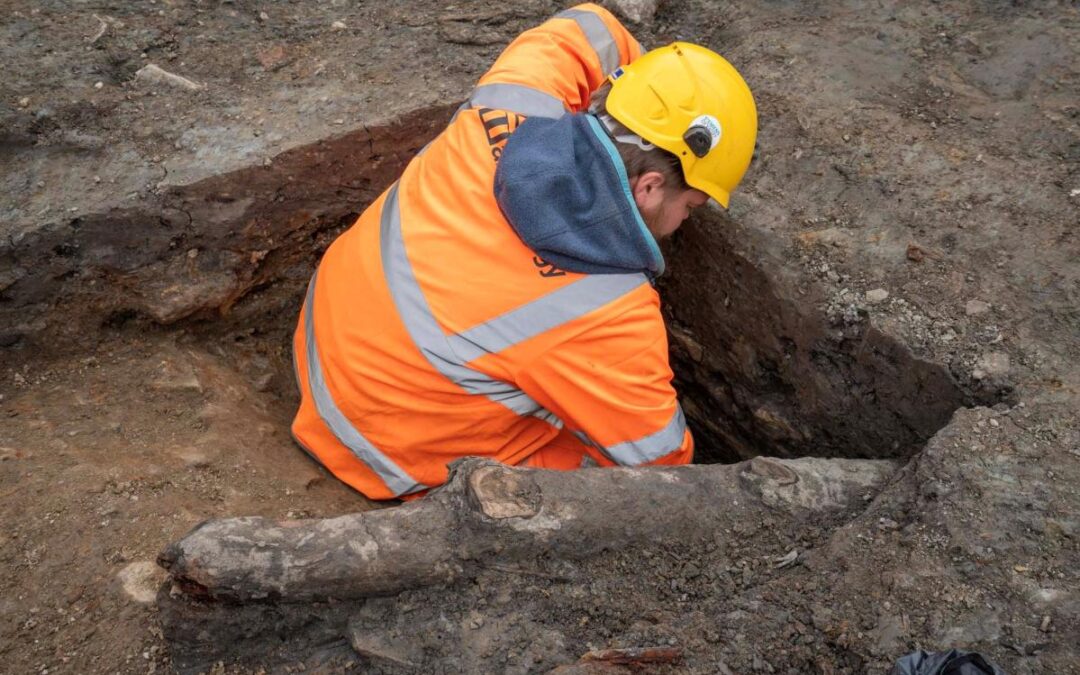
An exciting discovery has been made at Sheffield Castle by the Wessex Archaeology team who are currently excavating there.
Four 17th-century wooden stakes, around a metre in length, were carefully excavated from the moat. Analysis so far shows they could have formed part of an ‘abatis’.
Abatises are a well-known method of fortification. The wooden stakes would have been arranged chaotically and dug into the ground to form a vicious barrier, or ‘killing zone’, where defenders of the castle could dispatch them.
This is the first time the wood from an abatis has been recovered. Archaeologists usually find only the shadow of where the wood had once been.
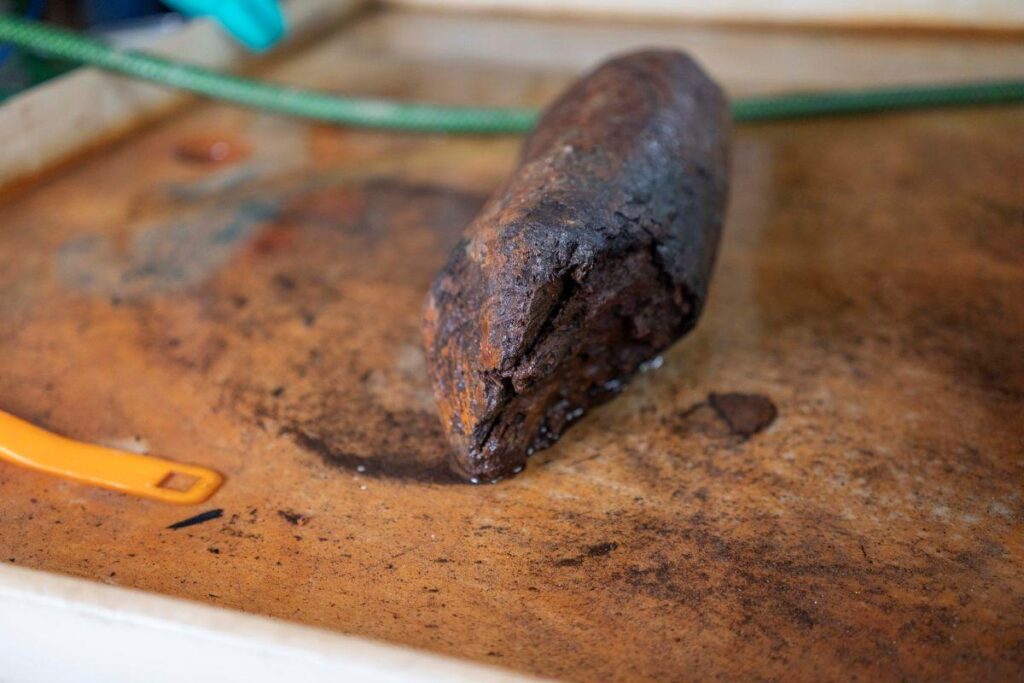
The timbers were preserved within the remains of the six-metre-deep moat and the waterlogged ground provided the ideal conditions for their preservation, meaning that they survived for almost 400 years.
Ashley Tuck, the archaeologist leading the dig on behalf of Wessex Archaeology, said: “So often we are told about Civil War defences like abatises being used at historic properties across the country, but usually there is little to see of these important features.”
“To be able to hold the very wood to which the defenders of Sheffield Castle trusted their lives is extraordinary.”
She added: “We know that these timbers and the abatis they formed were ultimately unsuccessful in protecting the castle from being destroyed, but they paint a picture of the brutalities of the war and add to our understanding of this turbulent period in Sheffield’s past.”
Experts have analysed them further and say that the branches were prepared crudely, with rough edges and visible axe marks, suggesting the people making this structure knew that an attack was imminent.
The timbers are currently at York Archaeology for careful conservation.
Sheffield Castle stood for hundreds of years, but after the Parliamentarian victory at the castle, it was left in ruins as a symbol of their victory.